Refinery Process Plant Troubleshooting & Problem Solving
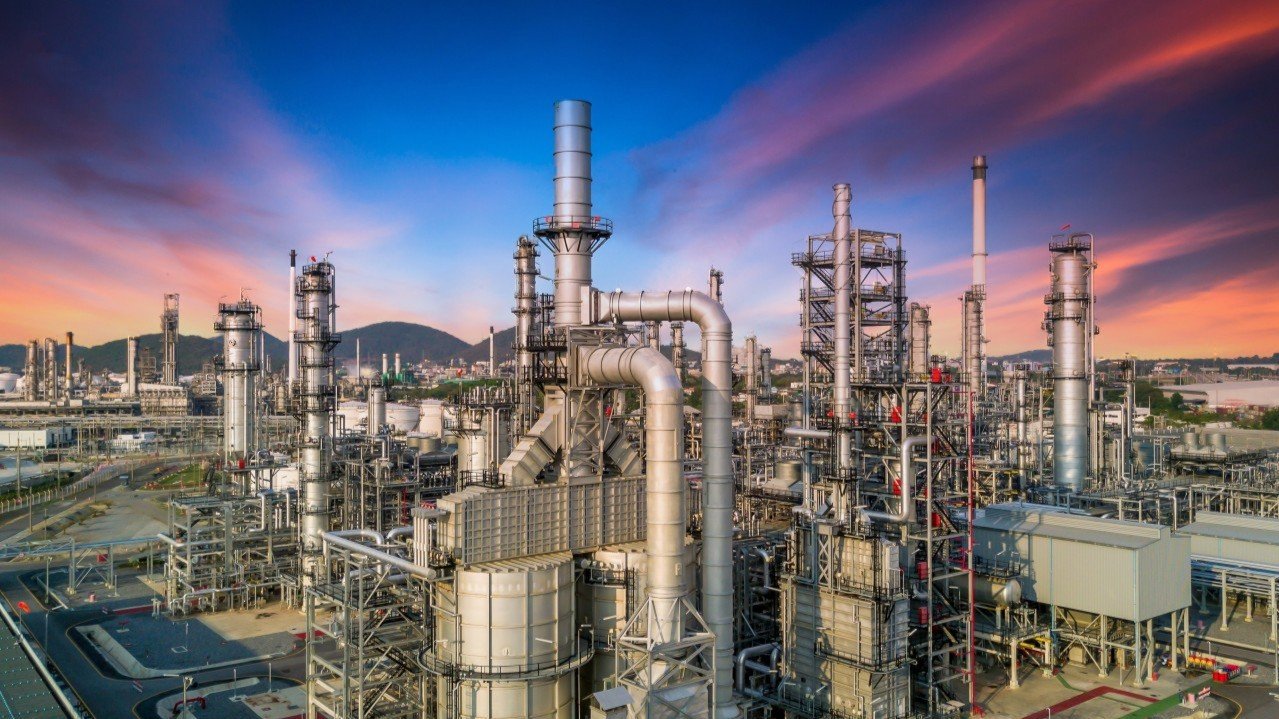
Petroleum refineries are large, complex industrial facilities that transform crude oil into a wide range of valuable products including transportation fuels (gasoline, diesel, jet fuel), heating fuels, lubricants, and petrochemical feedstocks.
The refining process involves a series of physical and chemical operations designed to separate crude oil into its natural components, convert heavier fractions into lighter, more valuable products, and remove impurities to meet strict product specifications and environmental regulations. Refinery Processes Refollow three fundamental stages:
Separation Processes:
- Atmospheric Distillation Unit (CDU): Separates crude into fractions according to boiling point ranges producing gases, naphtha, kerosene, diesel and atmospheric residue.
- Vacuum Distillation Unit (VDU): Processes atmospheric residue under vacuum to recover vacuum gas oil (VGO) and vacuum residue for further processing.
Conversion Processes:
these change the molecular structure to upgrade heavy fractions into lighter, more valuable products through:
Cracking:
- Fluid Catalytic Cracking (FCC): Converts VGO into gasoline, LPG, and light cycle oil.
- Hydrocracking: Uses hydrogen and catalyst to make diesel, ATK, UCO and naphtha from VGO feeds.
- Visbreaking: Mild thermal cracking to reduce viscosity of heavy fuel oil.
Coking:
- Delayed Coking Converts vacuum residue into lighter products and petroleum coke.
Reforming:
- Catalytic Reforming – Upgrades naphtha into high-octane reformate for gasoline and produces hydrogen.
Treating & Finishing Processes:
Hydrotreating: Removes sulfur, nitrogen, and metals using catalyst and hydrogen.
By A. Residue desulfurization in ARD units, Diesel, Kerosene and Naphtha hydrotreating.
Supporting Units:
- Hydrogen Production: Supply high‑purity hydrogen to meet the hydrogen requirement of ARDS, Hydrocracker, Hydrotreaters of Naphtha, Kerosene and Diesel.
- Sulfur Recovery Units (SRU): Claus process to recover elemental sulfur from H₂S.
- Tail Gas Treating (TGT): Achieve an overall sulfur recovery (SRU+TGTU) and H2S emission of 10 ppm by thermal incineration of tail gasses in the incinerator.
- Amine Regeneration: Supply lean amine and process the rich amine solution from gas absorbers and liquid contactors in the refinery.
- Sour Water Stripper (SWS): Stripped ammonia and hydrogen sulfide from sour water.
- Utilities: Steam, cooling water, instrument air, nitrogen, fuel, flushing oil and drainage.
- Wastewater Treatment: Removes oil, solids, and chemicals before discharge.
- Flare Gas Recovery Unit (FGRU): Recover flare gases into fuel gas.
Related Courses
Project Appraisal: Identification, Policy Analysis & Selection
Day 1 – Project Identification & Concept Development 8:00 – 9:15What “Project Appraisal” really meansTypes of projects and how to align them with organisational strategy 9:15 – 10:30Identifying real problems vs perceived problemsTurning needs into clear objectives and a solid project scope 10:30 – 11:45Stakeholder identification, mapping, and influence analysisPractical tools for idea generation and early concept shaping 12:00 – 2:00Hands-On Case Workshop: Identify viable project conceptsGroup reflection and insights Day 2 – Technical & Financial Analysis 8:00 – 9:15Assessing technical feasibility: resources, technology, site, constraintsEnvironmental, legal & regulatory considerations 9:15 – 10:30Financial appraisal essentialsEstimating capital and operating costs with accuracy 10:30 – 11:45Cash flow forecasting techniquesAdjusting for uncertainty, inflation, and risk 12:00 – 2:00Workshop: Build a simple yet practical financial model Day 3 – Economic & Social Appraisal 8:00 – 9:15Difference between financial and economic appraisalShadow pricing and valuing non-market impacts 9:15 – 10:30Social Cost–Benefit Analysis (SCBA)Environmental and sustainability impact assessments 10:30 – 11:45Understanding distributional impacts on communities and stakeholders 12:00 – 2:00Practical Exercise: Conduct an economic appraisal on a real case Day 4 – Policy Analysis & Project Selection 8:00 – 9:15Policy frameworks that influence project choicesPolicy analysis tools and models used in the public & private sector 9:15 – 10:30Multi-Criteria Analysis (MCA)Ranking, scoring, and prioritising projects 10:30 – 11:45Risk analysis using qualitative & quantitative approaches 12:00 – 2:00Workshop: Build a full project selection matrix Day 5 – Integrated Appraisal & Final Decision Making 8:00 – 9:15Integrating all appraisals: technical, financial, economic & policyDecision-making under uncertainty and incomplete information 9:15 – 10:30Preparing professional appraisal documentationKPIs, dashboards & evaluation metrics used by senior leaders 10:30 – 11:45Communicating findings to decision-makers with impact 12:00 – 2:00Final Group Project:End-to-end appraisal of a sample projectGroup presentationsExpert panel feedback & programme wrap-up
Process Plant Shutdown And Critical Activities: Isolation, Startup & Commissioning
Objectives:Understand the importance of plant shutdowns in the life cycle of process plants.Identify the various types of shutdowns: planned, emergency, and corrective.Overview of shutdown planning and preparation processes.Learn the critical isolation procedures for safely shutting down process units.Understand the safety requirements and regulatory compliance during isolation.Gain knowledge of startup activities post-shutdown.Understand how to safely transition from shutdown to normal operation.Understand the commissioning process for new or modified equipment and systems.Learn about commissioning checks and verification activities - Review the postshutdown performance of the plant and identify any issues.Understand how to improve future shutdown and startup processes. Day 1: Introduction to Process Plant Shutdown:Shutdown planning: objectives and strategies.Pre-shutdown activities: inspection, resource allocation, and preparation.Roles and responsibilities during a shutdown.Identifying potential challenges during plant shutdown. Day 2: Isolation Procedures and Safety Measures:Types of isolations: mechanical, electrical, and instrumentation isolations.Lockout and tag-out (LOTO) procedures.Hazard identification and risk assessments (HIRA).Safety standards and compliance during shutdown activities.Case study: Best practices in isolation. Day 3: Startup Procedures & Activities:Start-up checklist and sequence of operations.Safety precautions during the startup phase.Start-up testing and performance checks.Startup troubleshooting: identifying and solving common issues.Coordination between operators, engineers, and other stakeholders during startup. Day 4: Commissioning of Process Units:Commissioning phases: pre-commissioning, mechanical completion, and commissioning.Role of commissioning in plant optimization and performance validation.Common commissioning challenges and how to address them.Equipment testing, system verification, and start-up approval processesCoordination with design and operational teams during commissioning. Day 5: Post-Shutdown Evaluation and Performance Monitoring:Post-shutdown review and troubleshooting: identifying areas of improvement.Monitoring plant performance during the initial startup phase.Continuous improvement: lessons learned and feedback loops.Documenting the shutdown and startup process for future reference.
Safety Management & Emergency Controls
Program OverviewEnsuring safety in petroleum operations is essential to safeguarding people, assets, and the environment. This advanced training program is tailored specifically for petroleum industry professionals, equipping them with the knowledge and skills to implement robust Safety Management Systems and effective Emergency Controls aligned with global standards and best practices. Detailed Daily ScheduleDay 1: Foundations of Safety ManagementIntroduction to safety culture in petroleum operationsInternational standards (OSHA, ISO, NFPA) overviewSafety Management Systems: principles and practices Day 2: Hazard Identification & Risk AssessmentTypes of petroleum-sector hazards (fire, gas, chemical, operational)Practical tools for hazard recognition and risk evaluationWorkshop: real-world hazard mapping Day 3: Emergency Preparedness & Response PlanningDeveloping effective emergency response plansCommunication protocols and chain of commandCase studies: successful and failed responses Day 4: Crisis Leadership & Decision-MakingLeading teams during critical incidentsPsychological readiness and stress managementSimulation drills and group exercises Day 5: Building a Safety-First CultureEmbedding proactive safety behaviors in petroleum companiesCompliance audits and continuous improvementProgram review, Q&A, and certification ceremony